
A town with boating roots
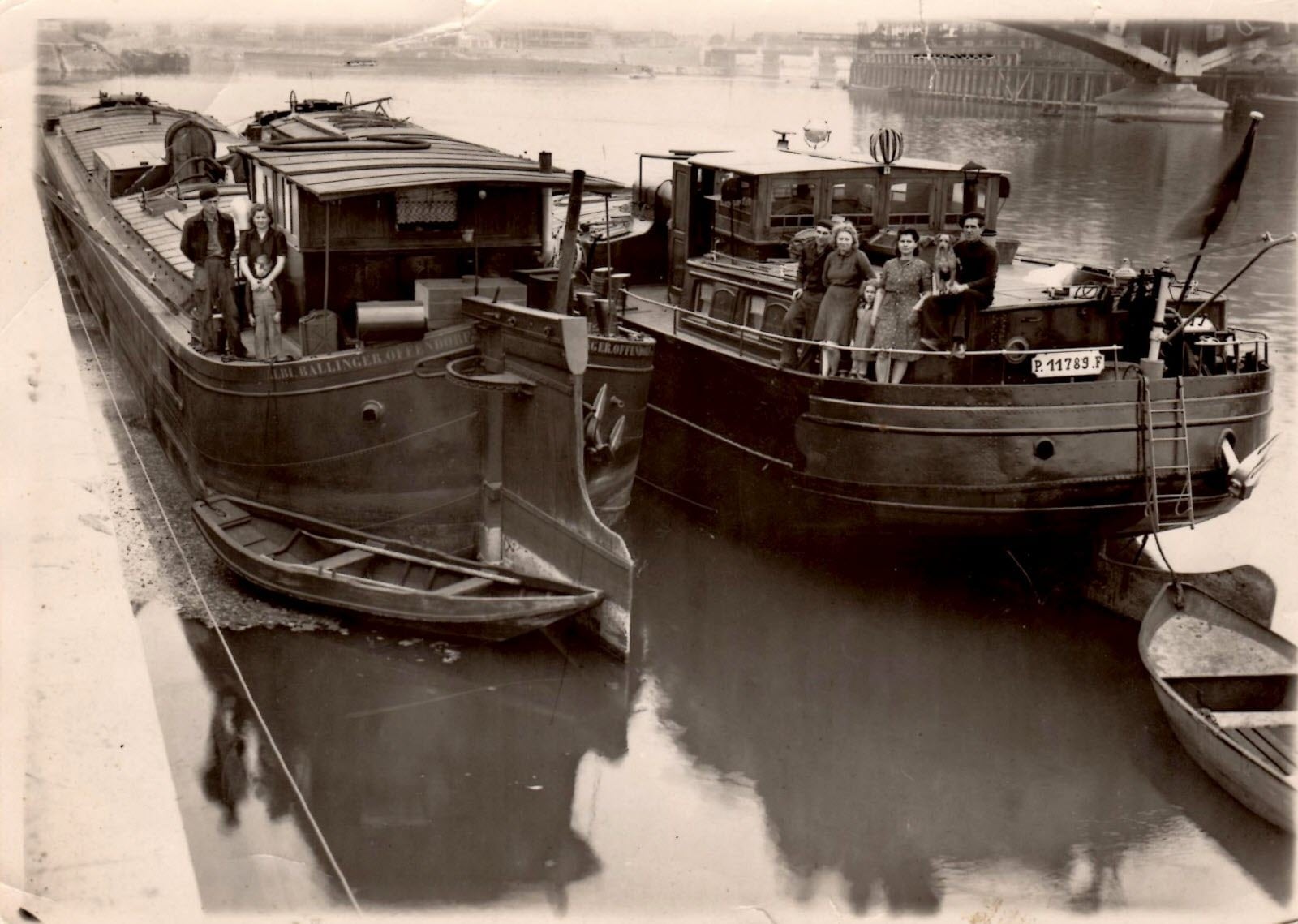
Kembs is no ordinary town. For generations, the bargemen of the Haut-Rhin lived here, moored their boats here and raised their families here. The Rhine, the canal, the running water — everything is a reminder that this Alsatian land is also a nautical one.
The idea of a marina was not born in 1985. As early as 1967, voices were calling for the Alsatian bank of the Rhine to host a space dedicated to boaters. Huningue turned the project down at the time. In the end it was Kembs, driven by mayor Eugène Moser, that took up the torch and created the conditions for an extraordinary adventure.
A sandwich that changes everything
It all begins on 29 September 1985, at the Niffer lock. Edmond Nussbaumer, a contractor from Ensisheim, and Marcel Miclo, the man in charge of the lock, share a frugal meal — a sandwich — during a break on site. The conversation takes a decisive turn: what if a marina were dug right here, on this branch of the canal?
The idea sounds mad. The window of opportunity is tiny: the canal has just been partially drained for maintenance work. In a few days it will be refilled. It is now or never.
Fourteen days to dig out history
The decision is made. They have to move fast — very fast. Fourteen days, not one more, before the canal is refilled. Aimé Spaeth, mayor of Kembs, gives his verbal agreement. Trust and a handshake are as good as a contract.
The machinery still has to be found. Jean-Paul Gerteis, from the Illzach gravel pits, supplies the plant required. The team comes together quickly. They improvise, they organise, they spur one another on. Work begins straight away.
Sirens in the night
Work is progressing, but nature — or a badly coordinated lock manoeuvre — is about to throw everything into disarray. One morning, before dawn, the sirens go off. The canal mysteriously begins to fill, well ahead of schedule. Water rises into the open excavation.
The site caravan belonging to Joseph Rieth, parked at the edge of the site, is swept away by the rising water. A bulldozer ends up half submerged. Work is halted as an emergency. Two precious days are lost — an eternity when the entire deadline is only fourteen days.
9 October 1985: mission accomplished
Despite the incident, the team redoubles its efforts. The machines run without respite. On 9 October 1985 it is done: 7,000 m³ of silt have been dredged from the canal bed. The basin is dug. The finishing work is completed on time. The canal can be refilled.
What had seemed impossible — digging a marina in two weeks flat — had just been achieved. A collective feat, born of an informal conversation and a shared determination.
1986: the official birth
Over the following months, the association takes shape. In 1986, Nautic Club Kembs is officially founded as an association under the local law of Alsace-Moselle. Marcel Miclo, the man who had come up with the idea over a sandwich, becomes its first president — a role he would hold for ten years, laying the club’s lasting foundations.
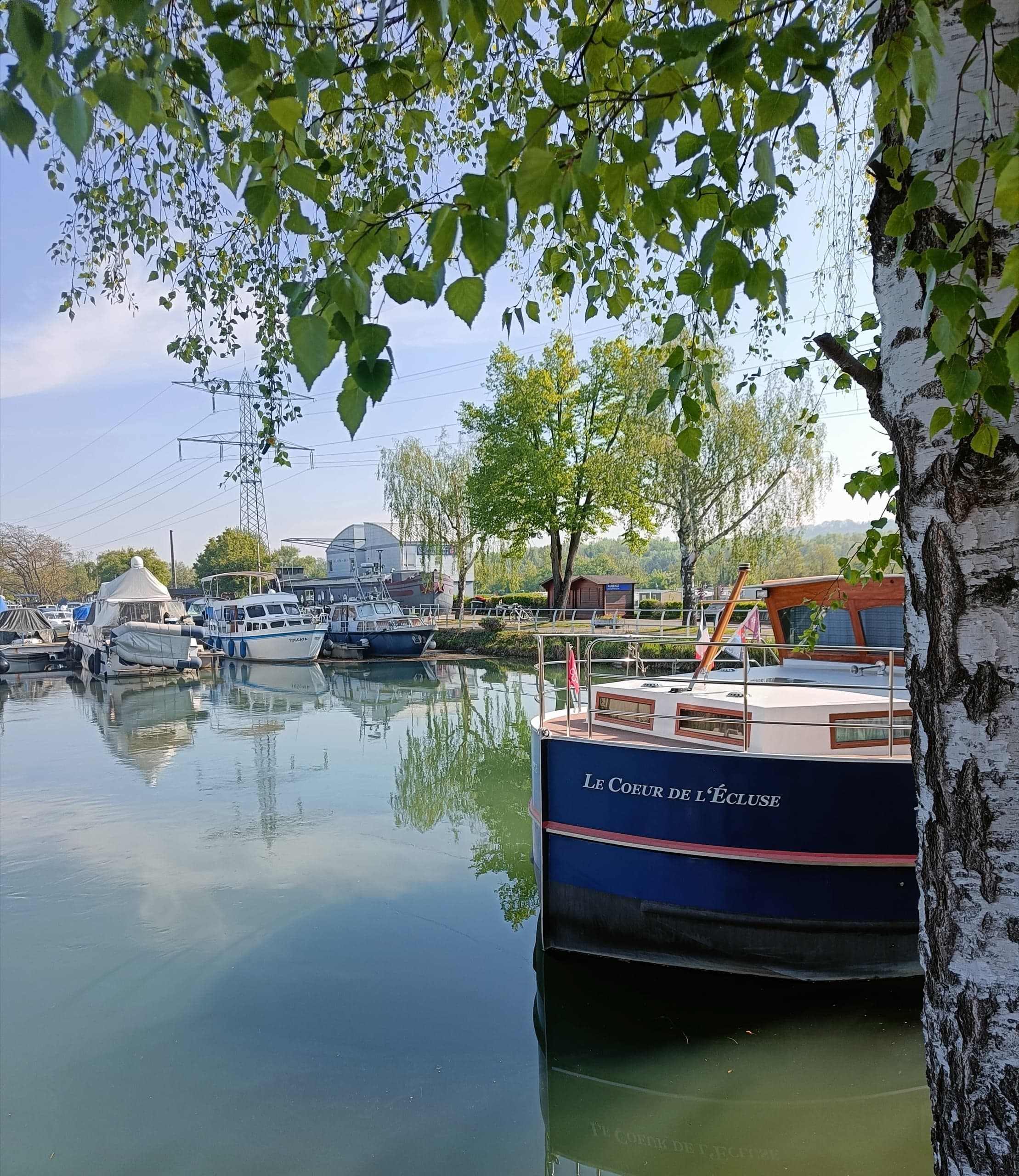
On 29 December 1986, the marina is officially inaugurated. André Weber sums up the spirit of the place in a phrase that has stayed in people’s memory: the marina at Kembs is “a window open onto navigation and onto the world” (DNA, 22 April 2022).
The club’s barges
From its earliest years, the club had a barge of its own — the Albi — which served as a gathering and welcome point. It was replaced by the Loyola, a péniche made of 50 tonnes of concrete, brought from Ottmarsheim by water in a memorable logistical operation. The Loyola became the beating heart of the club: the place for meetings, celebrations and gatherings among boaters.
Forty years on
Forty years after that improvised worksite, Nautic Club Kembs has 53 berths, almost all of them occupied year-round by loyal boat owners. The marina has evolved continuously, added facilities and welcomed generations of sailors from France, Germany and Switzerland.
The spirit of the founders — daring, conviviality, a love of the river — still animates the club. The window open onto navigation and onto the world has never been wider.
Sources
Account reconstructed from the testimonies of Marcel Miclo and Gérard Burgun, from photographic archives provided by local historian Claude Girardi and by the Ull-Beck family of Sierentz, and from press archives (Dernières Nouvelles d’Alsace, 22 April 2022; L’Alsace).